AquaFit Official Website › Blog › What Clinically Studied Ingredients Actually Means
What Clinically Studied Ingredients Actually Means
It is the only evidential claim on this bottle, it appears across most of this category, and almost nobody reads it closely. Here is what it can lawfully mean, what it cannot, and how to test it on any label you meet.
- Clinically studied says a trial exists somewhere. Clinically proven would be a claim about the finished product, and no trial of this one exists.
- A blend of individually studied ingredients has not itself been studied, at any ratio.
- The phrase names neither the ingredients nor the studies, so nobody outside the manufacturer can check it.
- The vendor's artwork names four compounds. The bottle names none, and no amount is given for any of them.
- An ingredient name with a milligram figure beside it is a claim that can be checked. A name on its own is a marketing decision.
What the phrase actually appears on
Three words sit above the product name on the front of the bottle, in small type: Clinically Studied Ingredients. They are the only evidential claim the label makes, and they are doing a great deal of work for three words.
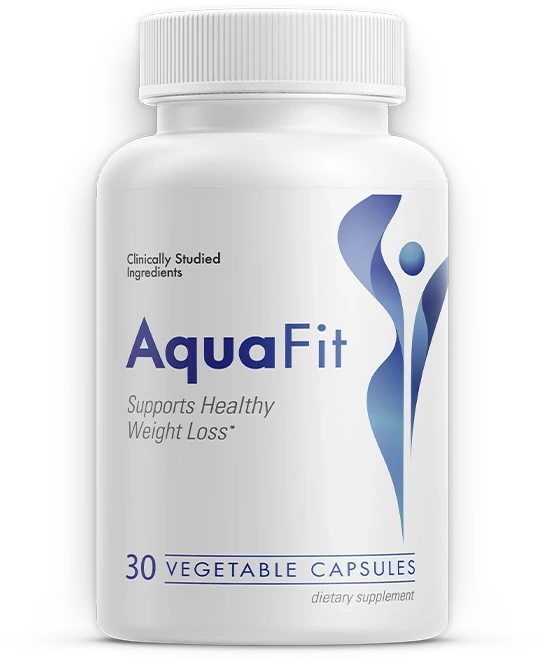
That is the whole of the front label: a claim about ingredients, three support lines, a capsule count and the words dietary supplement. There is no ingredient list and the distributor publishes no Supplement Facts panel online.
Studied is not proven, and the gap is the whole point
The two words are often used interchangeably in conversation and they mean very different things on a label.
- Clinically studied says a trial exists somewhere, of something. It does not say what the trial found, at what dose, in whom, or whether the finding was positive.
- Clinically proven would be a claim about the finished product, and it would require trials of that product. It is a much harder sentence to write lawfully, which is why it is much rarer on a bottle than in an advertisement.
A blend of individually studied ingredients has not itself been studied, at any ratio. That is not a technicality: interactions, absorption and the actual amounts all change when ingredients are combined, which is why the finished-product trial is the one that would count.
What would make the phrase checkable
Two additions, neither of them expensive. Name the ingredients, and name the studies. With the first, a reader could look up the literature themselves. With both, they could check whether the studies cited are the ones a specialist would have chosen. Without either, the sentence cannot be verified by anybody outside the manufacturer.
The artwork names four compounds the label does not
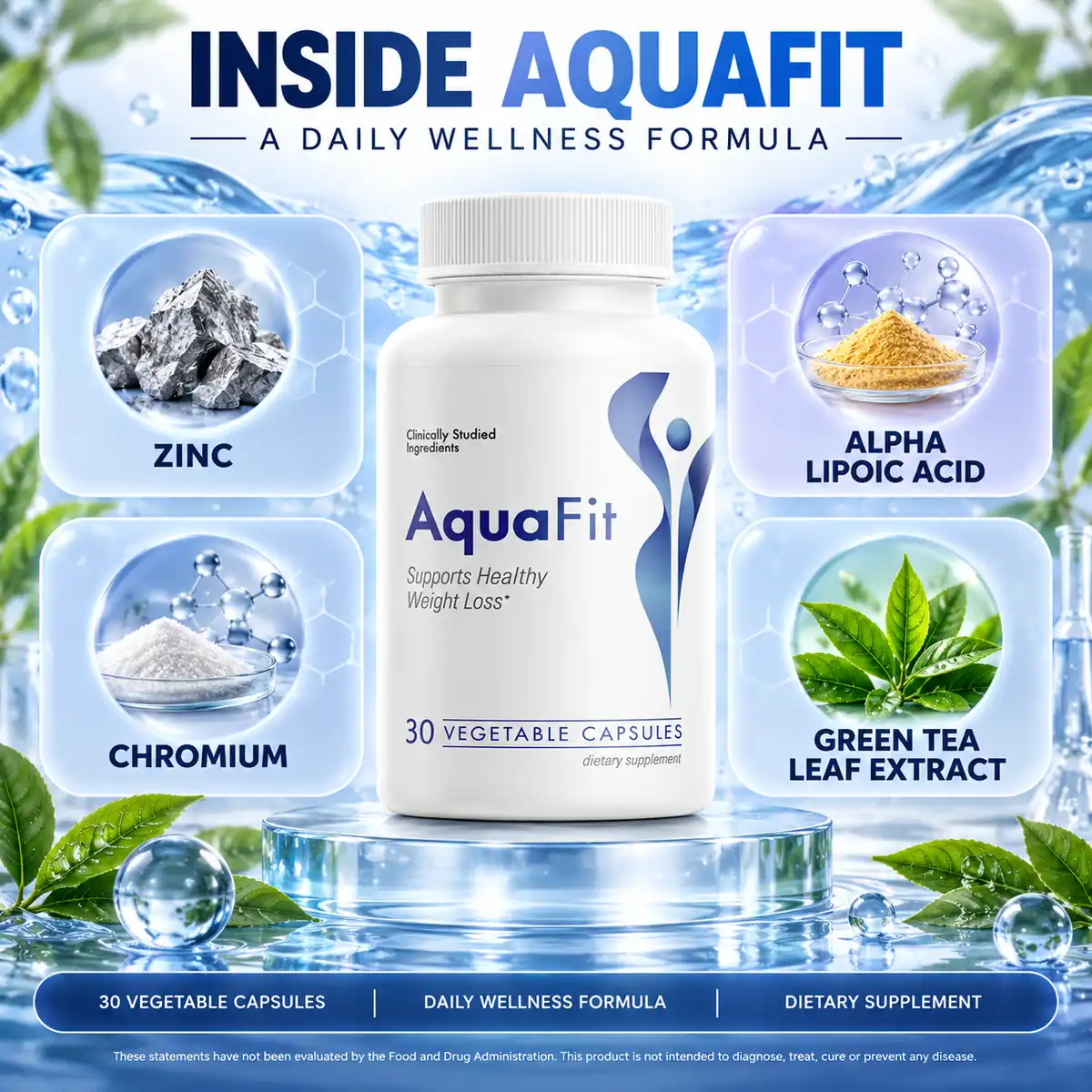
This is the closest anything gets to answering the question, and it is not a label. It is marketing artwork. A second piece of artwork in the same pack shows eight botanicals that are not those four, which is a useful reminder of how much weight artwork can bear.
For completeness, here is what the strongest published review of each of the four found. Read it as a guide to the compounds rather than as a description of the capsule, because nothing establishes that any of them is present.
| Named on the artwork | Amount given | What the best available review found |
|---|---|---|
| Zinc | Not published | Effects on body weight in specific populations only, and small (Abdollahi 2020) |
| Chromium | Not published | Small pooled difference, evidence graded low quality (Tian 2013, Cochrane) |
| Alpha lipoic acid | Not published | A small average reduction, generally at 300 to 1,800 mg daily (Namazi 2018) |
| Green tea leaf extract | Not published | Mean difference from placebo well under a kilogram, called not clinically important (Jurgens 2012, Cochrane) |
What a buyer can reasonably conclude
Two things, and they pull in different directions. The four compounds on the artwork are all real, all studied and all modest in effect. And there is no way to establish that this capsule contains any of them, in any amount.
Order AquaFit with the label read properly
Thirty vegetable capsules a bottle, a 60-day money-back window, and a website that tells you what the front label does not.
Current pack totals are shown at checkout
Order AquaFit On The Official WebsiteWhy the amount matters more than the name
Every result in that table came from a trial that used a specific amount for a specific length of time. An ingredient name with no amount beside it tells you which literature a seller would like to be associated with, and nothing about whether the product qualifies for the association.
This is not a theoretical concern. When researchers bought supplements off the shelf and measured what was actually inside them, declared amounts frequently did not match what was present, and some declared ingredients were absent altogether (Cohen 2023). A label that declares no amount cannot even be tested against that standard, which is a different problem from failing it and arguably a larger one.
The rule worth keeping
An ingredient name on a label is a marketing decision. An ingredient name with a milligram figure beside it is a claim that can be checked. Prefer the second, in every aisle, on every brand, including this one.
How common the phrase is, and what regulators say about it
Some version of it appears across most of this category, which tells you it is a useful phrase rather than a suspicious one. It sits just inside the line between a structure and function claim and an efficacy claim, and that line is drawn by the FDA in its labelling guidance (the FDA labeling guide) and policed in advertising by the FTC, whose compliance guidance for health products sets out what substantiation a claim needs (the FTC's health products guidance).
The short version of that guidance, for a reader rather than a lawyer: a claim has to be supported by evidence about the product as it is sold, at the amount it is sold in, in people like the ones it is sold to. An unnamed ingredient at an unpublished amount is some distance from meeting that.
None of which makes the phrase unlawful or the seller dishonest. It makes it uninformative, and a buyer is entitled to know which of the two it is before paying.
What to do when you meet the phrase on any label
Four questions, in order. They work on this product and on every competitor.
- Which ingredients? If the label will not say, nothing after this matters.
- How much of each? Compare with the amounts the trials used, not with the size of the claim.
- Which studies? A seller confident in its evidence can name three papers. Most cannot.
- Studied in whom? A trial in a clinical population does not transfer automatically to a healthy adult, and vice versa.
On this product the honest answers are: not published, not published, not named, and unknown. That is written on the ingredients page as well, and it is the reason this desk publishes a twelve-point checklist that its own product fails on four points.
Before you buy anything in this category. The NIH Office of Dietary Supplements publishes a fact sheet with no commercial interest in your decision (the NIH Office of Dietary Supplements), and it is a better first read than any retailer’s page including this one.
What a label that could back the phrase would look like
It is easier to criticise a sentence than to say what would fix it, so here is the fix. Four additions, none of them expensive, each one turning an unverifiable phrase into a checkable one.
| Addition | What it would let a reader do |
|---|---|
| Name every ingredient | Look up its literature, and hand the list to a pharmacist |
| Print an amount beside each name | Compare the dose with the amounts the trials used |
| Cite the studies by name or identifier | Check that the studies chosen are the ones a specialist would have chosen |
| State the population studied | See whether a trial in a clinical group transfers to a healthy adult |
A label carrying all four could say clinically studied ingredients and mean something specific by it. A label carrying none of them is asking for the benefit of the doubt, which is a reasonable thing to ask for and a poor thing to base a purchase on.
What this desk would publish if it could
A Supplement Facts panel photographed from a bottle, an amount beside every name, and a dose-versus-research table of the kind this website publishes for other products in the same family. None of the three is available. If your bottle carries a printed panel, send a photograph to [email protected] and this page changes the same week.
The three claims the phrase sits above
Directly below the phrase are the three support lines the bottle prints: supports healthy weight loss, maintains slim figure, supports healthy metabolism. The first carries the FDA footnote on the label itself.
All three are structure and function claims, which is the only kind of claim a dietary supplement may make. The distinction between those and a disease claim is what separates a supplement from a drug, and the FDA sets it out for consumers in plain language (the FDA).
Notice how the two halves work together. The support lines say what the product is for, at a temperature low enough to be lawful. The phrase above them supplies the impression of evidence without naming any. Neither half is false. Read together, they say considerably more than either says alone, and the FTC treats that combined impression as the claim (the FTC's health products guidance).
Sources
- Abdollahi S, Toupchian O, Jayedi A, et al. Zinc Supplementation and Body Weight: A Systematic Review and Dose-Response Meta-analysis of Randomized Controlled Trials. Adv Nutr. 2020;11(2):398-411. https://pubmed.ncbi.nlm.nih.gov/31504083/
- Tian H, Guo X, Wang X, et al. Chromium picolinate supplementation for overweight or obese adults. Cochrane Database Syst Rev. 2013;(11):CD010063. https://pubmed.ncbi.nlm.nih.gov/24293292/
- Namazi N, Larijani B, Azadbakht L. Alpha-lipoic acid supplement in obesity treatment: A systematic review and meta-analysis of clinical trials. Clin Nutr. 2018;37(2):419-428. https://pubmed.ncbi.nlm.nih.gov/28629898/
- Jurgens TM, Whelan AM, Killian L, et al. Green tea for weight loss and weight maintenance in overweight or obese adults. Cochrane Database Syst Rev. 2012;(12):CD008650. https://pubmed.ncbi.nlm.nih.gov/23235664/
- Cohen PA, Avula B, Wang Y, et al. Presence and Quantity of Botanical Ingredients With Purported Performance-Enhancing Properties in Sports Supplements. JAMA Netw Open. 2023;6(7):e2323879. https://pubmed.ncbi.nlm.nih.gov/37459101/
- U.S. Food and Drug Administration. Dietary Supplement Labeling Guide. https://www.fda.gov/food/dietary-supplements-guidance-documents-regulatory-information/dietary-supplement-labeling-guide
- Federal Trade Commission. Health Products Compliance Guidance. 2022. https://www.ftc.gov/business-guidance/resources/health-products-compliance-guidance
- National Institutes of Health, Office of Dietary Supplements. Dietary Supplements for Weight Loss: Fact Sheet for Consumers. https://ods.od.nih.gov/factsheets/WeightLoss-Consumer/
We write these pages from the AquaFit label, the distributor’s own paperwork and the order desk, cite public research for every compound we name, and print “not published” wherever a figure is not disclosed rather than estimating it. This label names no ingredients and publishes no panel, and we say so on every page where a buyer would look for one. Corrections are made on the page and the review date moves forward. Write to [email protected]. Every page, every journal post, the bottle facts and the ingredients go through review by Dr. Chioma Okafor-Mbah, MD before they ship. Last reviewed September 2026 by Dr. Chioma Okafor-Mbah, MD.