AquaFit Official Website › Weight Support Supplement Guide
A Guide To Weight Support Supplements And The Evidence Behind Them
What the phrase means on a label, what the pooled trial evidence shows, which compounds have been studied most, and what actually moves the number instead. Nothing in this guide is about a single brand until the last section.
Supplements sold for weight support produce small average effects in controlled trials, and the reviews that pooled them have said so consistently for twenty years.
The phrase weight support is a structure and function claim rather than a promise of a result. This guide explains what it can lawfully mean, what the evidence base looks like, and how to read any label in the category.
What weight support means on a supplement label
A dietary supplement may describe how a nutrient affects the structure or function of the body. It may not say a product treats, cures, prevents or mitigates a disease. That single distinction is why every label in this aisle reads the way it does (the FDA labeling guide).
| Wording on a label | What it is | Allowed |
|---|---|---|
| Supports healthy metabolism | A structure and function claim | Yes, with the FDA footnote |
| Maintains a slim figure | A maintenance claim about normal function | Yes, with the FDA footnote |
| Helps you lose 20 pounds in a month | A quantified outcome promise | No |
| Treats obesity | A disease claim, which makes it a drug claim | No |
| Clinically proven | An efficacy claim about the finished product | Only with trials of that product |
| Supports everyday wellness | Not a regulated claim at all | Yes, and it carries no information |
A cautious-sounding label is usually a lawful one rather than a modest one, and a bold-sounding advertisement has usually stepped outside the label it sells. The FTC treats the overall impression as the claim (the FTC's health products guidance).
What the pooled trials actually show
Four reviews across twenty years asked the same question. Their answers are close enough to be worth taking seriously.
| Review | What it pooled | What it concluded |
|---|---|---|
| Pittler and Ernst, 2004 | The first generation of this literature | The evidence was not compelling for any single supplement |
| Maunder and colleagues, 2020 | Herbal preparations, randomised trials | No herbal medicine produced a clinically meaningful difference |
| Bessell and colleagues, 2021 | Isolated organic compounds, placebo-controlled | Detectable but clinically small effects |
| Batsis and colleagues, 2021 | Supplements and alternative therapies | Very few had evidence strong enough to support a recommendation |
The honest expectation for anything in this aisle is small, and a seller promising otherwise is promising what the literature does not support. Small is not nothing, though, and a reader may reasonably decide a small average effect is worth a modest price.
The four studied most often, and what each review found
Four names dominate this category, each with a real literature behind it.
Chromium
The most studied mineral in the category. The Cochrane review of chromium picolinate found a small pooled difference against placebo, graded the evidence low quality, and described the clinical relevance as uncertain (Tian 2013, Cochrane). A later dose-response analysis in type 2 diabetes reached a similarly modest place (Vajdi 2024).
Green tea extract
The largest gap between reputation and result. A Cochrane review found a mean difference from placebo of well under a kilogram and called it not clinically important (Jurgens 2012, Cochrane). It is also among the agents most often named in reports of supplement-associated liver injury (Navarro 2017).
Alpha lipoic acid
The most supportive record of the four, and still modest. A meta-analysis of clinical trials reported a small average reduction in body weight, generally at 300 to 1,800 mg a day for 8 to 24 weeks (Namazi 2018), and a more recent review looked at intermediate markers rather than weight itself (Luo 2025).
Zinc
An essential mineral with a real deficiency syndrome and an established upper limit, which makes it a different kind of ingredient from the other three. A dose-response meta-analysis found effects only in specific populations, and small ones (Abdollahi 2020).
Why the number beside an ingredient matters more than the ingredient
Every result above came from a trial using a specific amount for a specific length of time. A label naming a compound without an amount has told you which literature it wants credit for and nothing about whether it qualifies. When researchers measured what was inside shelf-bought supplements, declared amounts frequently did not match (Cohen 2023), and a label declaring no amount cannot be tested against that standard at all.
The one rule worth carrying out of this guide. An ingredient name on a label is a marketing decision. An ingredient name with a milligram figure beside it is a claim that can be checked. Prefer the second, every time, in every aisle.
What does move the number in controlled trials
Here is the comparison, from trials larger and better controlled than anything in the supplement literature.
| Approach | What the trial reported | What it cost the participants |
|---|---|---|
| The Diabetes Prevention Program | A structured food and activity programme outperformed both placebo and metformin over several years | Sustained effort, group sessions and coaching |
| Look AHEAD | Intensive lifestyle intervention produced weight change maintained over years, with mixed effects on hard cardiovascular endpoints | Intensive support over a long period |
| A meta-analysis of named diet programmes | Differences between named diets were small. Adherence dominated the result | Whatever the chosen diet costs, plus keeping to it |
| A four-diet randomised trial | The diet people stuck with worked better than the diet that theoretically should have | The same |
| The National Weight Control Registry | Ten-year maintenance is achievable and is associated with consistent self-monitoring | A permanent change in routine |
The effective approaches are the effortful ones, and adherence rather than mechanism separates a result from a non-result (Wadden 2020). A daily capsule still has value as a reminder that you are paying attention, provided nobody calls it the mechanism.
Why weight regain is the norm rather than a personal failure
Any guide that stops at what works is only half honest. Losing weight changes appetite and energy expenditure in the direction that restores what was lost, and that response is physiological rather than a matter of willpower (Greenway 2015).
That matters for a supplement buyer in one specific way. If a product appears to help for six weeks and then stops, the most likely explanation is not that the capsule stopped working. It is the ordinary shape of the thing.
What to ask before buying anything in this category
- ●What is in it, and how much? If the label does not say, the rest cannot be answered
- ●How does it compare with the trials? Most supplement doses are a fraction of what the research used
- ●What does it cost per day? Not per bottle. Per day is the only comparable figure
- ●Who do I call if it goes wrong? A number and an address are cheap to publish and most sellers still do not
- ●How long to change my mind? And is that window long enough to find out anything
The NIH fact sheet answers the first two better than any retailer can (the NIH Office of Dietary Supplements).
Where AquaFit sits against all of this
This guide is published by a desk that sells one of these products, so here is AquaFit against the five questions above.
| Question | AquaFit's answer |
|---|---|
| What is in it, and how much? | Not published. The label names no ingredient and no panel is published |
| How does the amount compare with the trials? | Cannot be answered, for the same reason |
| What does it cost per day? | The checkout total divided by 30 per bottle. No figure is published as text |
| Who do I call if it goes wrong? | +1 (888) 254-0425, 7:00am–9:00pm, seven days, with a New York returns address |
| How long to change my mind? | 60 days from purchase, which covers the window most buyers report anything in |
Two good answers, two poor ones and one in between. A reader who concludes that the first two matter more than the last two has reached a defensible position, and we would rather they reached it here. The detail is on the ingredients page.
Where the AquaFit pages get their evidence
These papers concern supplement categories and named compounds in general. None of them studied this capsule, and none could, because the label names no ingredient to study.
- Pittler MH, Ernst E. Dietary supplements for body-weight reduction: a systematic review. Am J Clin Nutr. 2004;79(4):529-36. https://pubmed.ncbi.nlm.nih.gov/15051593/
- Maunder A, Bessell E, Lauche R, et al. Effectiveness of herbal medicines for weight loss: A systematic review and meta-analysis of randomized controlled trials. Diabetes Obes Metab. 2020;22(6):891-903. https://pubmed.ncbi.nlm.nih.gov/31984610/
- Bessell E, Maunder A, Lauche R, et al. Efficacy of dietary supplements containing isolated organic compounds for weight loss: a systematic review and meta-analysis of randomised placebo-controlled trials. Int J Obes (Lond). 2021;45(8):1631-1643. https://pubmed.ncbi.nlm.nih.gov/33976376/
- Batsis JA, Apolzan JW, Bagley PJ, et al. A Systematic Review of Dietary Supplements and Alternative Therapies for Weight Loss. Obesity (Silver Spring). 2021;29(7):1102-1113. https://pubmed.ncbi.nlm.nih.gov/34159755/
- Tian H, Guo X, Wang X, et al. Chromium picolinate supplementation for overweight or obese adults. Cochrane Database Syst Rev. 2013;(11):CD010063. https://pubmed.ncbi.nlm.nih.gov/24293292/
- Jurgens TM, Whelan AM, Killian L, et al. Green tea for weight loss and weight maintenance in overweight or obese adults. Cochrane Database Syst Rev. 2012;(12):CD008650. https://pubmed.ncbi.nlm.nih.gov/23235664/
- Namazi N, Larijani B, Azadbakht L. Alpha-lipoic acid supplement in obesity treatment: A systematic review and meta-analysis of clinical trials. Clin Nutr. 2018;37(2):419-428. https://pubmed.ncbi.nlm.nih.gov/28629898/
- Abdollahi S, Toupchian O, Jayedi A, et al. Zinc Supplementation and Body Weight: A Systematic Review and Dose-Response Meta-analysis of Randomized Controlled Trials. Adv Nutr. 2020;11(2):398-411. https://pubmed.ncbi.nlm.nih.gov/31504083/
- Cohen PA, Avula B, Wang Y, et al. Presence and Quantity of Botanical Ingredients With Purported Performance-Enhancing Properties in Sports Supplements. JAMA Netw Open. 2023;6(7):e2323879. https://pubmed.ncbi.nlm.nih.gov/37459101/
- Knowler WC, Barrett-Connor E, Fowler SE, et al. Reduction in the incidence of type 2 diabetes with lifestyle intervention or metformin. N Engl J Med. 2002;346(6):393-403. https://pubmed.ncbi.nlm.nih.gov/11832527/
- Johnston BC, Kanters S, Bandayrel K, et al. Comparison of weight loss among named diet programs in overweight and obese adults: a meta-analysis. JAMA. 2014;312(9):923-33. https://pubmed.ncbi.nlm.nih.gov/25182101/
- Thomas JG, Bond DS, Phelan S, Hill JO, Wing RR. Weight-loss maintenance for 10 years in the National Weight Control Registry. Am J Prev Med. 2014;46(1):17-23. https://pubmed.ncbi.nlm.nih.gov/24355667/
- Greenway FL. Physiological adaptations to weight loss and factors favouring weight regain. Int J Obes (Lond). 2015;39(8):1188-96. https://pubmed.ncbi.nlm.nih.gov/25896063/
- National Institutes of Health, Office of Dietary Supplements. Dietary Supplements for Weight Loss: Fact Sheet for Consumers. https://ods.od.nih.gov/factsheets/WeightLoss-Consumer/
- U.S. Food and Drug Administration. Dietary Supplement Labeling Guide. https://www.fda.gov/food/dietary-supplements-guidance-documents-regulatory-information/dietary-supplement-labeling-guide
We write these pages from the AquaFit label, the distributor’s own paperwork and the order desk, cite public research for every compound we name, and print “not published” wherever a figure is not disclosed rather than estimating it. This label names no ingredients and publishes no panel, and we say so on every page where a buyer would look for one. Corrections are made on the page and the review date moves forward. Write to [email protected]. Every page, every journal post, the bottle facts and the ingredients go through review by Dr. Chioma Okafor-Mbah, MD before they ship. Last reviewed September 2026 by Dr. Chioma Okafor-Mbah, MD.
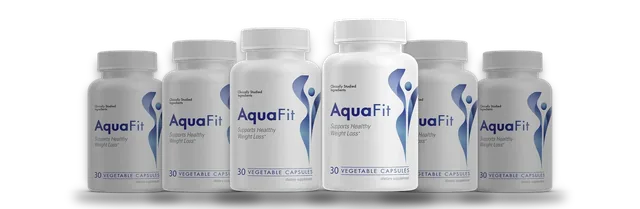
Order AquaFit with the category in view
A guide like this one is worth reading before buying anything in this aisle, including this. There are 60 days from purchase either way.
Current pack totals are shown at checkout
Order AquaFit On The Official Website30 vegetable capsules a bottle · 60-day money-back guarantee · lot AF-26/BR-5104 · orders desk +1 (888) 254-0425